Commercial Monument Sign Cost: What to Budget For

Updated: 4 days ago
Comparing monument sign quotes can be tricky when one estimate includes permits and installation while another covers fabrication alone. To understand the real commercial monument sign cost, look beyond the total and review the details: dimensions, materials, lighting, foundation work, electrical needs, site access, and project coordination. A smaller non-illuminated sign may suit one property, while a multi-tenant development may need a larger directory built for visibility and future updates. This guide explains common price factors, additional expenses, and ways to prepare a useful project brief so you can compare proposals on an equal footing.
Key Takeaways
- Treat $3,000 to $50,000+ as a starting budget range
: Your project’s price depends on its design, materials, lighting, and site conditions.
- Account for costs beyond fabrication
: Include permits, engineering, site preparation, foundations, electrical work, equipment, installation, and maintenance.
- Get an itemized estimate based on your property
: Clarify what’s included, which approvals are needed, and how changes or unexpected work will be priced.
What Is a Commercial Monument Sign?
Freestanding signs for entrances, property names, and tenant directories
A commercial monument sign is a freestanding sign installed close to the ground, often near a property entrance or along a road. Its solid base gives it a substantial appearance that can complement nearby buildings and landscaping. Common materials include brick, stone, concrete, metal, and high-density urethane, selected to suit the site and the sign’s design.
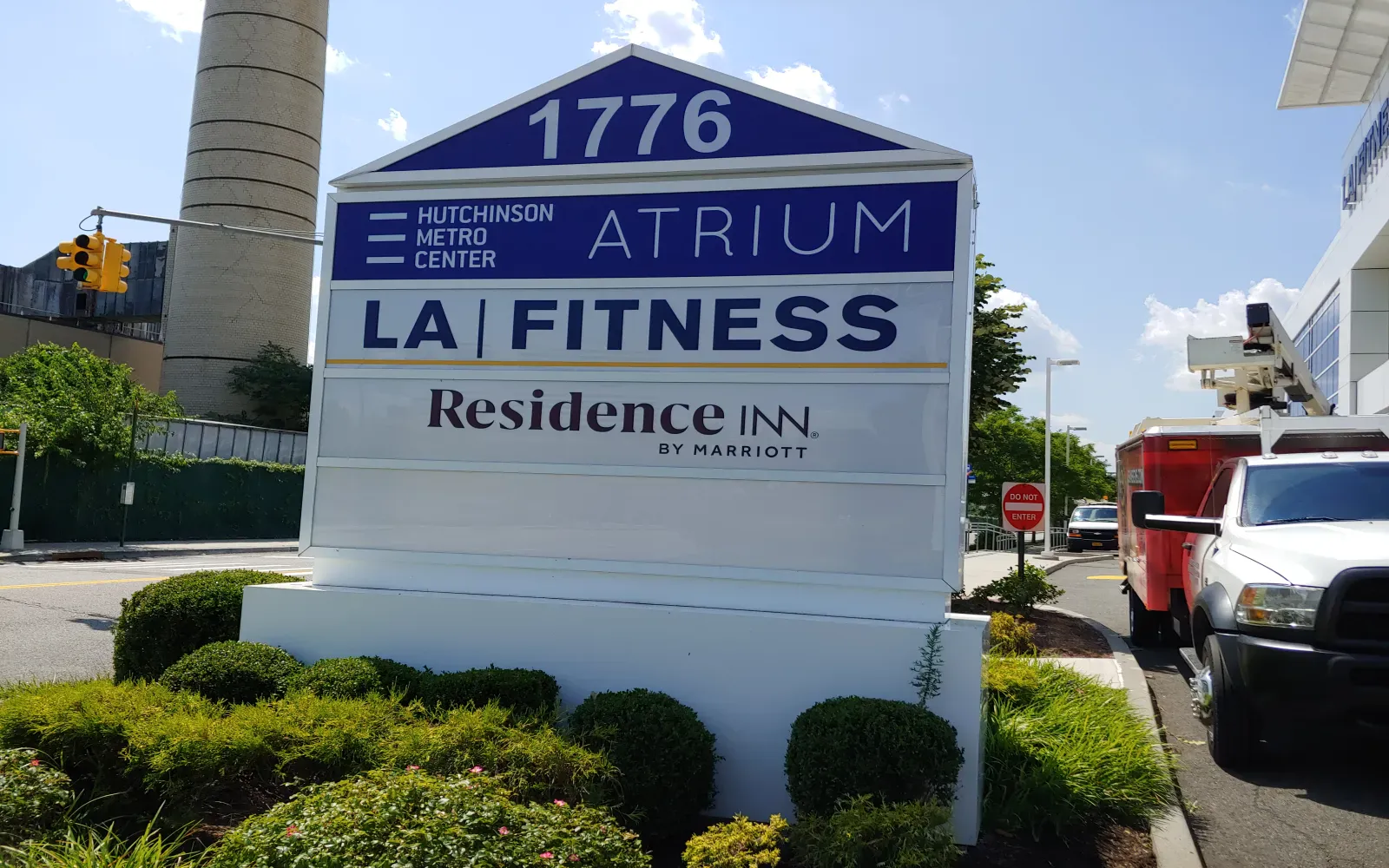
A monument sign can identify one business, name a property, or display several tenants on separate panels. This makes it a practical option for office parks, shopping centers, and other developments where visitors need to find a specific destination. Tupp Signs describes their use at business parks and corporate campuses, where signs can represent both the property and the organizations located there.
How monument signs improve visibility, branding, and wayfinding
Positioned where people can see them as they approach a property, monument signs help visitors recognize an entrance and find the right destination. Letter size, contrast, spacing, and viewing distance all affect how quickly someone can read the sign. For multi-tenant properties, a clear directory layout helps drivers and pedestrians identify the business, office, or facility they are looking for.
A monument sign can also establish a property’s identity before visitors reach a building. Using a business’s logo, colors, and other visual details can make the sign feel consistent with its broader brand. Tupp Signs highlights how these elements support brand recognition. A successful design balances visual appeal with readability, site conditions, and local sign requirements.
Uses at commercial properties, retail centers, campuses, and institutions
Monument signs are often installed at entrances to shopping centers, office parks, healthcare facilities, hotels, schools, universities, and religious or civic institutions. A sign may identify a single organization, name an entire property, or combine both functions with a directory of tenants or departments. At larger sites, additional directional information can help visitors locate parking, buildings, or specific entrances.
The right design depends on the property’s layout, who needs to find it, and how the sign will be viewed. Monument signs at retail centers and campuses, for example, can guide drivers toward the correct building or business, helping reduce confusion. Creative Sign Designs discusses the role commercial signs play in directing visitors around malls, campuses, and business centers. In the New York City area, San Signs & Awnings offers commercial signage services, including support with planning, permitting, fabrication, and installation.
What Affects Commercial Monument Sign Cost?
Commercial monument sign costs depend on the sign’s design and the conditions at the property. A simple, non-illuminated entrance marker has different requirements from a large tenant directory with lighting, a masonry base, and a custom foundation. Even signs with similar dimensions can require different levels of design, fabrication, permitting, and installation work.
Before choosing materials or requesting a quote, think about where the sign will go, who needs to read it, and what information it must display. Consider whether visitors approach on foot or by car, whether the sign needs to be visible after dark, and whether tenants may change over time. These details help shape a practical design and make it easier to compare estimates.
For properties in the New York City area, local rules and site conditions can also affect the project scope. San Signs & Awnings supports clients through planning, permitting, fabrication, and installation. Its project process can help property owners understand the steps involved before work begins.
Size, height, viewing distance, and number of tenant panels
A sign should be sized for the people who need to read it and the distance from which they’ll see it. A small entrance marker may work for a pedestrian walkway, while a sign beside a busy road may need larger lettering and a wider display area. Greater height and size can require more materials, structural support, and installation work.
The number of tenant panels also affects the design and fabrication. A directory with several businesses needs a clear layout and enough space for names and logos to remain legible. If tenant details may change, consider how panels can be updated. Sharing the sign’s location, intended viewing distance, and tenant list with a sign professional helps establish an appropriate size and scope. Browse examples of retail and commercial signage for ideas suited to business properties.
Materials: aluminum, steel, brick, stone, concrete, and high-density urethane
Materials affect a monument sign’s appearance, durability, weight, and installation needs. Aluminum is commonly used for sign faces and structures, while steel can provide added strength. Brick, stone, and concrete create a substantial architectural presence. High-density urethane can be shaped and finished to achieve a dimensional look with less weight than many masonry materials.
The best fit depends on the property’s style, exposure, maintenance needs, and budget. A material with a higher initial cost may be worthwhile if it supports the intended look and holds up well in its setting. Ask how each option will perform outdoors and whether it needs protective coatings or regular maintenance. This overview of monument sign materials can help you compare common options before discussing specifications with your sign provider.
Design: custom shapes, dimensional lettering, mixed materials, and premium finishes
A basic rectangular sign is generally more straightforward to fabricate than a design with a custom silhouette, layered elements, or detailed architectural features. Dimensional lettering, custom logos, mixed materials, and specialty finishes can make a sign feel more connected to a property’s brand, but they may add design and production work.
Start with the information the sign needs to communicate. A property name should be easy to spot, while a tenant directory needs a clear hierarchy and readable text. Then choose visual details that support the building’s character without competing with the message. Share brand guidelines, site photos, and examples of existing signage early in the process. This gives the design team useful context and helps clarify how custom features may affect fabrication, approvals, and installation.
Lighting and technology: non-illuminated, LED-lit, halo-lit, and digital displays
A non-illuminated sign may suit a site with strong ambient light or mostly daytime traffic. For visibility after dark, LED lighting can illuminate the sign face, while halo lighting creates a glow behind dimensional letters. Digital displays can show changing messages, but they require display equipment, electrical connections, and a plan for managing content.
Compare options based on when visitors need to see the sign and how often its information changes. Lighting and digital features can affect project costs as well as ongoing energy use and maintenance. They may also be subject to local regulations or property rules. Before settling on a design, confirm that the preferred lighting or display type is allowed at the site and discuss any operational requirements with your sign provider.
Site conditions, foundations, access, and electrical needs
The site can affect the work required to install a monument sign. Uneven ground, existing pavement, underground utilities, nearby landscaping, or limited access for equipment may call for extra preparation and coordination. A larger or heavier sign may need a more substantial foundation. Illuminated and digital signs may also require electrical work and a suitable power connection.
Share available site plans, photos, utility information, and access details when requesting an estimate. A site review can reveal conditions that drawings may not show and help identify what work is needed before installation. Ask which tasks are included in the estimate, such as excavation, foundation work, electrical connections, and restoration of the surrounding area. San Signs & Awnings explains its coordinated approach from planning through installation in its overview of how the process works.
Zoning rules, sign codes, and property restrictions
Local requirements can affect a sign’s height, size, placement, lighting, and design. Rules vary by municipality and property type. A landlord, business district, or property association may also have restrictions that apply in addition to local codes. For a New York City-area project, confirm which authorities and property rules apply to the specific location.
Permits and reviews can affect both the schedule and the design. A sign may need revisions to meet code or property requirements, so it’s wise to check these details before approving fabrication. Ask who will identify applicable rules, prepare permit documents, and coordinate reviews. San Signs & Awnings offers information about common project questions in its signage FAQs. Getting clarity early can help limit design changes and keep the project scope clear.
How Much Does a Commercial Monument Sign Cost?
A commercial monument sign can be a simple entrance marker or a custom structure with lighting and tenant panels. Its cost depends on the design, materials, features, and installation site. Use a planning range to start, then get an estimate based on your property and project requirements.
Use $3,000–$50,000+ as a planning range, not a guaranteed quote
For early budgeting, plan for roughly $3,000 to $50,000 or more. A smaller, non-illuminated sign may cost less than a large custom structure, and complex projects can exceed this range. Treat it as a starting point, not a guaranteed price. A monument sign pricing guide illustrates how size, materials, illumination, and site conditions can change costs. In the New York City area, local permitting and property requirements may also affect the estimate. Before setting a firm budget, share your location, goals, and preferred features with a sign company.
Compare costs for non-illuminated, illuminated, and digital signs
A non-illuminated sign generally has fewer components than an illuminated or digital one. Adding LED lighting can improve visibility after dark, but it may require electrical work and additional equipment. Digital displays can show changing messages, though the display and controls typically add cost and may require ongoing maintenance. Consider when people need to see the sign and what information it must communicate. A monument sign cost overview explains how sign type and scale influence pricing. Compare the initial cost with visibility needs, operating requirements, and upkeep to choose features that make sense for your property.
Include material, design, engineering, and site-work choices
Monument signs can use aluminum, steel, brick, stone, concrete, or high-density urethane. Each material offers a different appearance, lifespan, and price point. Custom shapes, dimensional lettering, mixed materials, and specialty finishes can add to fabrication costs. The project may also include design, engineering, a site survey, excavation, and a foundation suited to the location. Illuminated signs may need electrical connections as well. Ask for an itemized estimate that separates these costs. This makes it easier to compare options and adjust the design while keeping visibility, durability, and your property’s style in mind.
Get a site-specific estimate instead of relying on an average
An average cannot account for every property. Access for installation equipment, foundation requirements, electrical service, zoning rules, and permit approvals can all affect the project scope. When comparing estimates, check that each one covers the same work, including design, permits, fabrication, site preparation, and installation. San Signs & Awnings’ project process covers planning through installation, including permitting and compliance support. Ask which details the estimate assumes, what approvals are still needed, and whether site changes could affect the price. A site-specific review helps clarify costs before work begins and gives you a more reliable basis for budgeting.
What Additional Costs Should You Include?
The sign itself is only one part of your budget. Design, permits, site preparation, electrical work, equipment, and installation can all add to the total. The exact costs depend on the sign’s features and the conditions at your property, so an online price range may not reflect the work your project requires.
Ask for an itemized estimate that separates design, fabrication, permits, site work, and installation. Check which services are included, which are billed separately, and what assumptions the estimate makes. A sign company that coordinates the process from planning through installation can help identify requirements early. San Signs & Awnings explains its project process, including the steps involved in bringing a custom sign from concept to installation.
Design, engineering, and site surveys
Design and engineering costs depend on the sign’s size, structure, materials, and features. A simple design may need limited planning, while a custom monument sign with multiple tenant panels, lighting, or mixed materials may require detailed drawings or structural review. A site survey can help confirm the proposed location and identify conditions that may affect the design or installation.
Before approving an estimate, ask whether it includes design revisions, engineering documents, and a site survey. Find out what assumptions the price relies on, such as the foundation type and electrical scope. A monument sign cost guide outlines project details that a clear estimate should address, helping you compare proposals and understand what may be priced separately.
Permits, zoning reviews, and code-compliance support
Permits and reviews can affect both your budget and project schedule. Requirements for sign height, size, lighting, and placement vary by municipality and property. A shopping center, campus, or multi-tenant development may also have its own sign criteria in addition to local rules.
Ask who will prepare and submit permit applications, respond to review comments, and coordinate design changes if needed. Confirm whether application fees are included or billed separately. These details are best addressed before fabrication begins, since revisions to meet sign requirements can affect cost and timing. This guide to common custom sign planning issues highlights why permit requirements deserve attention early in the process.
Site preparation, excavation, foundations, and landscaping
A monument sign may require more than a clear space on the property. Depending on the site and sign design, work could include clearing, excavation, grading, a concrete foundation, or repairs to landscaping after installation. Pavement, buried utilities, slopes, and drainage may also affect the scope.
Ask whether the estimate covers excavation, foundation materials, soil removal, and restoration of the surrounding area. If your property is under construction, confirm how sign installation will coordinate with paving, utility work, and other trades. Site work can require specialized labor and equipment, so define the responsibilities before construction starts. This overview of monument sign installation costs explains why fabrication is only one part of the total project.
Electrical hookups, installation, equipment, and site access
An illuminated sign may need wiring, electrical connections, and coordination with an electrician. Costs can depend on the distance to a power source and whether trenching or other electrical work is necessary. Installation may also require a crane, lift, or other equipment, particularly for a large or heavy sign.
Check whether the estimate includes electrical work, equipment rental, delivery, and installation labor. Site access can affect the plan too. Narrow entrances, limited work hours, traffic, or restricted loading areas may influence how crews and equipment reach the installation location. Ask your sign provider to review access conditions and list any assumptions in writing. Discussing these details early can help you understand the scope and avoid surprises during installation.
Project coordination, maintenance, and repairs
A monument sign project involves multiple steps, including design approvals, permits, fabrication, site work, and installation. Coordination helps keep these tasks aligned, especially when property owners, tenants, contractors, and local reviewers are involved. Confirm who your main point of contact will be and how the team will share updates, gather approvals, and handle schedule changes.
Plan for care after installation as well. Ask about cleaning, lighting checks, replacement parts, repair services, and any warranty coverage for the sign or its components. Maintenance needs vary based on materials, finishes, and technology. Review San Signs & Awnings’ frequently asked questions and ask your provider which services are available after installation, so you can factor future upkeep into your budget.
How Can You Budget for a Commercial Monument Sign?
Define the sign’s purpose, audience, and must-have features
Start by deciding what the sign needs to do. A monument sign might identify a business park, mark a campus entrance, display a property name, or list several tenants. Its purpose influences what information to include, where to place it, and how visible it needs to be from nearby roads or walkways.
Consider who will read the sign and what they need to know at a glance. Drivers may need a property name and entrance direction, while visitors arriving on foot may benefit from a directory. Make a list of must-have features, then separate them from optional additions before requesting pricing. This gives your sign provider a clear brief and makes proposals easier to compare. Tupp Signs’ monument sign planning guidance can help you think through branding and wayfinding goals.
Prioritize legibility, branding, size, materials, lighting, and tenant information
Make readability the priority. Think about viewing distance, sightlines, traffic speed, and how much information someone can absorb quickly. Give the property name, logo, and essential directions the clearest placement. If the sign will list tenants, decide how many panels you need and whether the design can accommodate future changes.
Next, weigh appearance against durability and maintenance. Brick, stone, metal, and high-density foam offer different looks and upkeep needs. Lighting can improve visibility after dark, but it also adds electrical and installation considerations. Ask your provider to explain how size, materials, illumination, and lettering choices affect the price. Tupp Signs’ overview of monument sign materials offers useful points to consider before choosing a finish.
Request an itemized estimate for design, fabrication, permits, site work, and installation
Ask for an itemized estimate rather than a single total. It should identify costs for design, engineering if needed, fabrication, permit support, site preparation, foundation work, electrical work, delivery, equipment, and installation. Seeing the costs separately helps you understand which choices have the greatest effect on the budget and where you may be able to adjust the scope.
The estimate should also describe the sign itself, including dimensions, materials, lighting, lettering, and foundation assumptions. When comparing proposals, confirm that each provider is pricing the same specifications and services. A detailed scope helps prevent gaps between fabrication and installation. San Signs & Awnings’ project process outlines planning, permitting, fabrication, and installation, useful steps to discuss with your sign provider.
Confirm what the estimate covers and how approvals or site conditions may affect costs
Before approving a quote, clarify who will handle permit applications, code reviews, and communication with the property owner or municipality. Requirements can vary by location and property, including rules for sign height, size, lighting, and placement. For a New York City-area project, make sure the estimate accounts for approvals that apply to your specific site.
Ask whether the price assumes clear access, existing electrical service, and particular foundation or ground conditions. A site review may reveal underground utilities, limited equipment access, or landscaping that needs protection. Find out how additional work will be priced if reviewers request changes or site conditions differ from the original assumptions. San Signs & Awnings’ FAQs provide a starting point for questions about custom signage and project requirements.
Set aside contingency funds for unexpected site needs or permit requirements
Even a carefully planned project can uncover extra work during site review or installation. The ground may need additional preparation, access may be more limited than expected, or a permit review may require design changes. Ask your sign provider which parts of the project carry the most uncertainty, then set aside contingency funds based on those risks.
Keep that allowance separate from the approved sign scope. Agree on how additional work will be documented and approved before it begins, so everyone understands the cost and the reason for the change. You can also reduce surprises by sharing property plans, utility information, landlord requirements, and previous permit documents early in the process. These details help your provider develop a more complete estimate and flag possible issues before fabrication starts.
Balance upfront costs with durability, maintenance, and end-to-end support
The lowest initial price may not be the best value over time. Compare materials and finishes based on weather exposure, maintenance needs, repair options, and how easily tenant panels or graphics can be updated. Ask about cleaning, replacement parts, lighting maintenance, and the process for changing tenant information. These details help you understand the cost of owning and maintaining the sign, not just the cost of installing it.
Also consider who will coordinate design, permits, fabrication, and installation. Clear responsibility for each step can help keep project details organized and reduce handoff issues. When reviewing proposals, compare the full scope and ongoing care alongside the upfront price. San Signs & Awnings supports commercial clients from planning through fabrication and installation.
Frequently Asked Questions
How much should I budget for a commercial monument sign? A broad planning range is about $3,000 to $50,000 or more. Your actual price depends on the sign’s size, materials, lighting, design, location, and installation requirements. Request a site-specific estimate before setting a final budget.
What details should I share when requesting an estimate? Provide the property address, site plans or photos, intended sign location, viewing distance, and the information the sign needs to display. Include tenant details, preferred materials, lighting needs, and any landlord or property guidelines you already have.
Do monument sign estimates usually include permits and installation? Not always. Ask for an itemized estimate that states whether design, permit support, site preparation, foundation work, electrical connections, equipment, and installation are included. Confirm who will handle applications and any required revisions.
Can I reduce the cost of a monument sign without making it hard to read? Yes. Focus spending on clear lettering, appropriate size, and durable materials, then compare optional features such as custom shapes, specialty finishes, and digital displays. A sign professional can help you adjust the design while preserving its main purpose.
How can I avoid unexpected costs during the project? Arrange a site review and share available utility information, access details, property rules, and previous permit documents early. Ask which assumptions the estimate relies on and how additional work will be reviewed and approved if site conditions or permit requirements change.