


Why Change a Sign People Already Recognize?

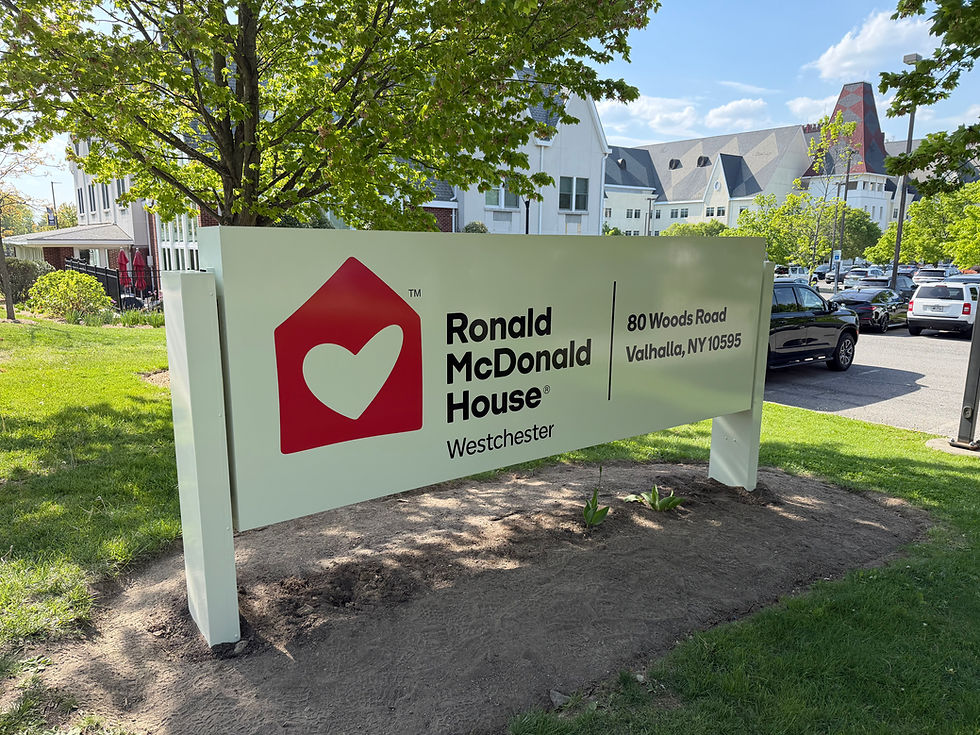
A recognizable sign is often considered a successful sign.
People know where the organization is.
They recognize the name.
They associate the location with a familiar purpose.
In many cases, that recognition takes years to build. It is earned through visibility, consistency, community presence, and trust. Once established, it becomes one of the most valuable assets an organization can have.
Which raises an interesting question.
If people already recognize the sign, why change it?
At first glance, replacing a familiar sign can seem unnecessary. If the sign is still visible, still functional, and still recognized by the public, what problem is being solved?
The answer often has less to do with the sign itself and more to do with what the sign represents.
Recognition and representation are not always the same thing.
A sign may be recognized by thousands of people and still no longer reflect the organization behind it as accurately as it once did.
Organizations evolve.
Their missions become clearer.
Their services expand.
Their audiences grow.
Visual identities are refined.
What represented an organization fifteen years ago may not fully represent the same organization today.
This creates a challenge that many businesses, nonprofits, healthcare organizations, schools, and community institutions eventually face.
How do you modernize your public identity without sacrificing the recognition you've spent years building?
The answer is rarely found in dramatic change.
In fact, some of the most successful sign updates are surprisingly restrained.
They preserve familiarity while improving representation.
People often assume the purpose of a sign is visibility.
Visibility is certainly part of it.
But the longer an organization exists, the more important another function becomes.
Representation.
A sign does not simply help people find a place.
It communicates who that organization is.
It reflects its values, its identity, and the way it wishes to be perceived by the public.
When those elements change, the physical environment often needs to evolve alongside them.
This is why sign updates are frequently connected to larger organizational transitions.
A company may refine its brand standards.
A healthcare organization may modernize its visual identity.
A nonprofit may introduce a new logo that better reflects its mission.
A growing organization may simply reach a point where its physical presence no longer reflects the level of professionalism it has achieved.
In each case, the sign becomes one visible expression of a much larger evolution already taking place.
The challenge is finding the balance between continuity and change.
Change too little, and the updated identity may never fully communicate itself.
Change too much, and years of recognition can be weakened.
The strongest sign updates manage to accomplish both goals simultaneously.
They respect the familiarity people already trust while creating a more accurate representation of the organization moving forward.
That balance is often what separates a replacement from a successful transition.
Because the most effective sign changes are rarely about becoming someone new.
They are about becoming a more accurate version of who you already are.
In that sense, changing a recognizable sign is not necessarily an attempt to leave the past behind.
Sometimes it is simply a way of ensuring that what people recognize continues to represent the organization they know today.


